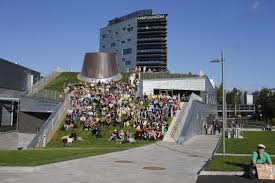
Biomedical technology is a multidisciplinary field that builds on understanding biological systems on the molecular level and develops new approaches to advance medical and biotechnological applications. The programme brings together expertise and methods in many fields in natural, medical, and engineering sciences: biology, chemistry, medicine, genetics, statistics, and computational and data sciences.
When applying to the Master's Programme in Biomedical Technology (MSc), you may choose from the following three options:
Biomedical Informatics (natural sciences)
Cell Technology
Molecular Biology
Our target group are students with a background in biosciences, computational sciences or natural sciences who want to attain in-depth knowledge and hands-on skills in the crossroads of molecular biology, cell technology and biomedical informatics, with a special emphasis on areas that have the potential to enhance human health. The courses are firmly grounded on international research and focus on transferring this knowledge into practice.
Biomedical Informatics
Rapidly developing measurement technologies combined with increasing computing resources are transforming biosciences towards health data science. Today, complex datasets are collected to study human health and disease at multiple scales, ranging from molecular and cellular levels to patient, population, and healthcare systems levels.
The specialization Biomedical Informatics builds expertise on developing and applying advanced computational methods, including artificial intelligence tools, to address current and future challenges relevant for human health. This specialization provides you with the foundations to become an expert in data science and health informatics, including regulatory requirements. Health informatics experts can find careers for example in the IT services industry or in hospitals in developing new IT systems for healthcare. Data science skills enable you to pursue careers to develop algorithms for multidisciplinary problems at the intersection of health and IT, pharmaceutical, biotechnology, or medical device industry, and to work as a bioinformatician or data-scientist in various roles in research and industries focusing for example on big data from molecular level to population level. The Biomedical Informatics specialization is jointly taught in both our international programmes.
 Canada
 USA
USA
 UK
UK
 Australia
 Korea
Korea
 Ireland
 New Zealand
 Europe
 Japan
Japan