School of Law has produced a great number of graduates over one century. Statistics shows that the Judicial Officials Training Institute produced 210 graduates, the Law School 29 graduates, Kyungsung Professional School 360 graduates, Kyungsung Professional Law School 1,283 graduates, Keijo Imperial University 335 graduates, and Seoul National University School of Law 15,121 graduates (by the 58th commencement in 2004), the total number being 17,338. As they did in the past, the graduates of School of Law do and will continue to play an indispensable leadership role, in practically all of the fields of law, politics, economy, society and culture, within the nation and worldwide.
Living at the heart of School of Law's daily operations through its long-term development projects, the Alumni Association has served and accommodated the multifaceted and challenging needs of the School of Law community proactively, since its inaugural meeting on November 2, 1957. The Alumni Association has also been publishing the Naksan Hoebo bulletin, and renewed its voluminous membership list nine times. Further, the scholarship fund from the Naksan Scholarship Committee has been one of the most prestigious and invaluable financial resources available to the undergraduate students to support their legal studies each year.
In 1999, the expansive "Brain Korea 21 (BK 21)" research project was launched under the general title of the "Development of Korean Law in the Global Legal System," with virtually all of School of Law's faculty members participating. The project particularly aims to enhance and substantiate the legal education at the graduate school of law. As of the publication of this centennial history, there are four research centers or hubs implementing the BK 21 project: the Center for Law and Economy (director: Kwon Oseung), the Center for Public Interest and Human Rights Law (director: Chung Insup), the Center for Korean Law (director: Choi Chongko), and the Center for Comparative Studies of Legal System (director: Ho Munhyok).
Kuksan Law Library has continuously made an uncompromising effort to better supply research materials for the School of Law community and for the public. The Law Library currently contains certain special collections such as Ferdinand Kniep Collection (5639 volumes), Friedrich Tezner Collection (967 volumes), Ernst Zittelman Collection (879 volumes), Bae Jeonghyon Collection (559 volumes), Kang Kuchin Collection (375 volumes), Yu Minsang Collection (168 volumes), Chung Hichul Collection (155 volumes), Yoon Sukeum Collection (140 volumes), Kim Kwinam Collection (301 volumes), Lee Heungbae Collection (174 volumes), Hong Nampyo Collection (1367 volumes), Kwak Chul (3800 volumes), Kim Dochang Collection (4827 volumes), Sung Minkyung Collection (212 volumes), and Cho Youngrae Collection (300 volumes). The following faculty members served as the directors of the Law Library: Lee Taero, Hwang Jeokin, Choi Daikwon, Ahn Kyonghwan, Choi Byoungjo, Chung Insup, Yoon Jinsoo, and Jong Sangjo.
As previously noted, the Law Research Institute has published the Seoul Law Journal in the Korean language and various other monographs. Further, the Law Research Institute has sponsored many symposiums and seminars. There are two research centers affiliated to the Law Research Institute: the Center for Financial Law and the Center for Law and Technology. The following faculty members served as the directors of the Law Research Institute: Ryu Kichyun, Lee Hankey, Chung Hichul, Kim Chisun, Pai Jaishik, Suh Wonwoo, Kim Tchulsu, Hwang Jeokin, Kwon Youngsung, Lee Hojung, Yang Seungkyu, Choi Daikwon, Kim Konsik, and Choi Byoungjo.
The Special Document Room(the "Treasure Room") located within the faculty research building (Building No. 17) contains many of the rare original documents, including original writings of the deceased faculty members and the writings and publications of landmarking legal scholars and law practitioners. Choi Chongko is in charge of the operation of the "Treasure Room."
NOTE: The university may have additional program-specific eligibility requirements. It is recommended to verify these on the official university website
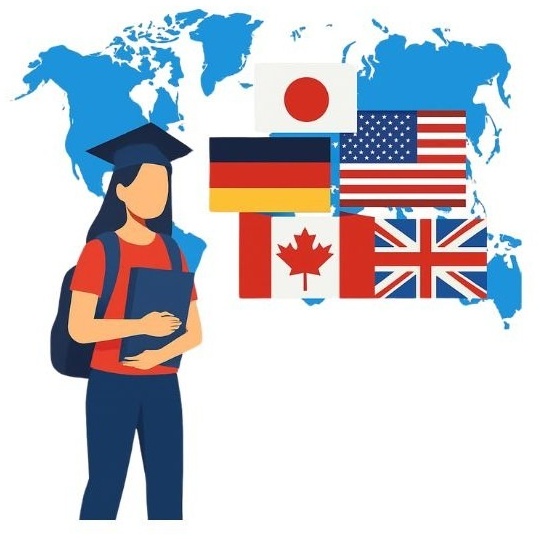
 Canada
 USA
USA
 UK
UK
 Australia
 Korea
Korea
 Ireland
 New Zealand
 Europe
 Japan
Japan
.jpg)